
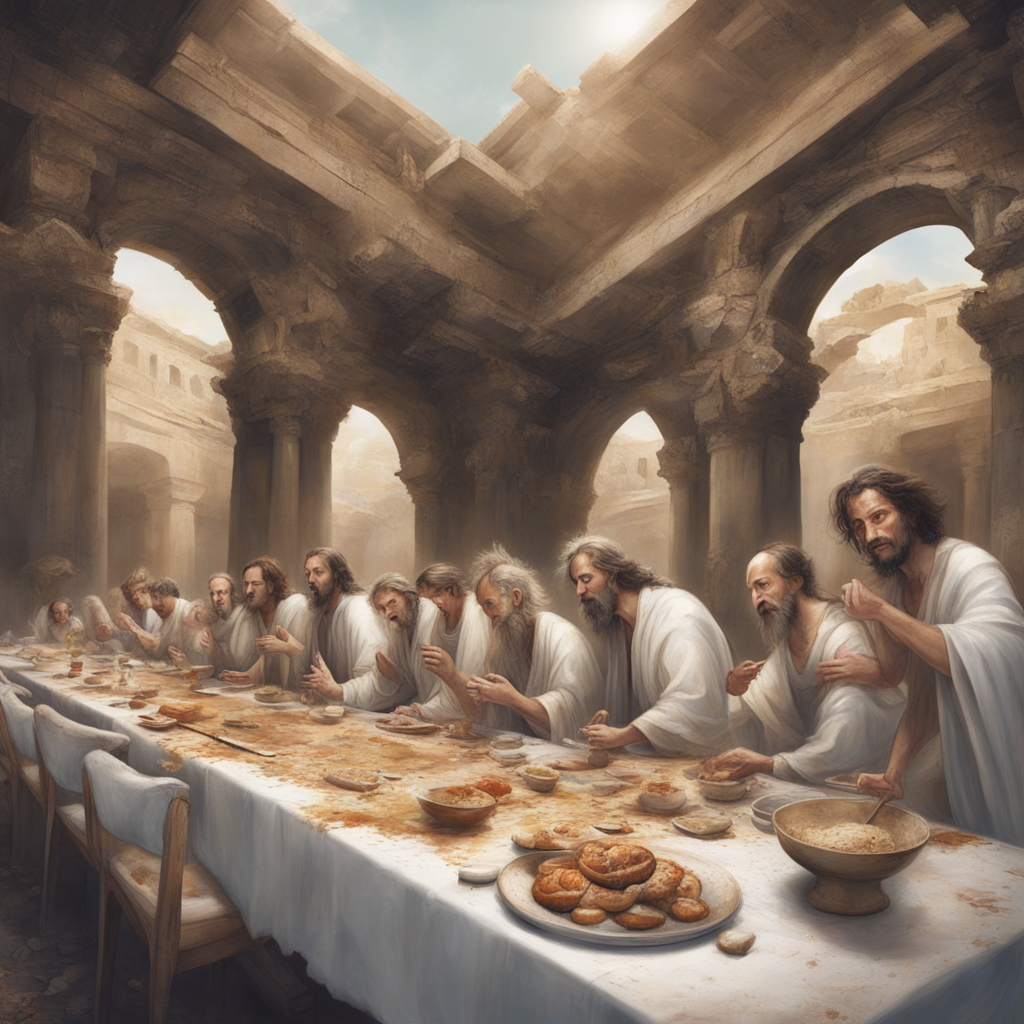
I entered an abandoned temple that lay in ruins before me. I felt significance coming from a meeting hall further in the temple, so I went into it, along with a few of the expedition team that came with me. I made it to a long table, and remarked that this is where it happened. I woke up for a minute, and went back to sleep. When I did, I went back to the same dream, but earlier in time as the last supper was happening. The holy scene broke out into a food fight. The happy days themesong played in the background as dramatic closeups of everyone's face during the food fight happened. Names appeared, saying names of people I couldn't read as different apostles, and the world stopped for a moment each time the names appeared like a sitcom from the 1970's. The last thing I saw before I woke up was a still of the apostle James, and what appeared was my name underneath, as though I was that apostle. There were still 3 others, and Jesus wasn't revealed, but I woke up at the sight of my own name.
Your dream presents a rich tapestry of symbolism, emotions, and themes, intertwining elements of history, spirituality, and personal identity. Let's break it down step-by-step.
The abandoned temple represents a place of spiritual exploration but also neglect. This could signify aspects of your life or psyche that you feel have been overlooked or forgotten. Temples often symbolize a search for higher truth or deeper meaning, indicating that you may be on a quest for spiritual growth or self-discovery.
Walking towards the meeting hall suggests you are drawn to an important gathering—a subconscious sign of your desire to connect with others or deeper parts of yourself. The phrase "this is where it happened" points to a pivotal moment in your life, perhaps a breakthrough or realization that has yet to unfold or that you are starting to understand.
Transitioning to the Last Supper signifies a deep connection to themes of community, betrayal, and revelation. This biblical scene is loaded with varying interpretations, symbolizing sacrifice, companionship, and the complexity of human relationships. The fact that you return to this scene implies a revisit of these themes, possibly indicating that you are coming to terms with personal relationships or challenges—perhaps feeling a need to confront past grievances or misunderstandings.
The sudden shift into a food fight amidst this momentous event illustrates a juxtaposition of solemnity and chaos. This may symbolize your feelings about conflict in your life—whether it’s miscommunication or conflict in relationships. The "Happy Days" theme provides a nostalgic backdrop, suggesting that you might be longing for simpler, more joyful times, or that you are seeking fun and lightheartedness amid serious circumstances.
The dramatic close-ups are reminiscent of television sitcoms, indicating a desire for recognition or attention in your life. The recollection of names you couldn’t read could suggest unresolved feelings about people from your past or a longing to connect with specific aspects of yourself represented by these figures. The apostles stand as representations of loyalty, betrayal, or transformation, highlighting deep-seated fears or aspirations in your relationships.
The pivotal moment comes when you see your name under the apostle James. This suggests a personal identification with his qualities—possibly loyalty, dedication, and perhaps a burden of leadership or consequences of choice. By seeing your name, it seems you’re reflecting on your role in your own life’s narrative.
Ultimately, your dream captures a journey through self-exploration and communal experiences while highlighting unresolved themes related to identity, relationships, and personal histories. The blend of joy and chaos in the narrative suggests an internal struggle to balance lightness and seriousness in your life. Consider reflecting on your current relationships and experiences to uncover deeper insights. This dream invites you to explore not just the past's importance but also the way you relate to those around you now and how those connections define your sense of self.